
 Call (832) 856-9586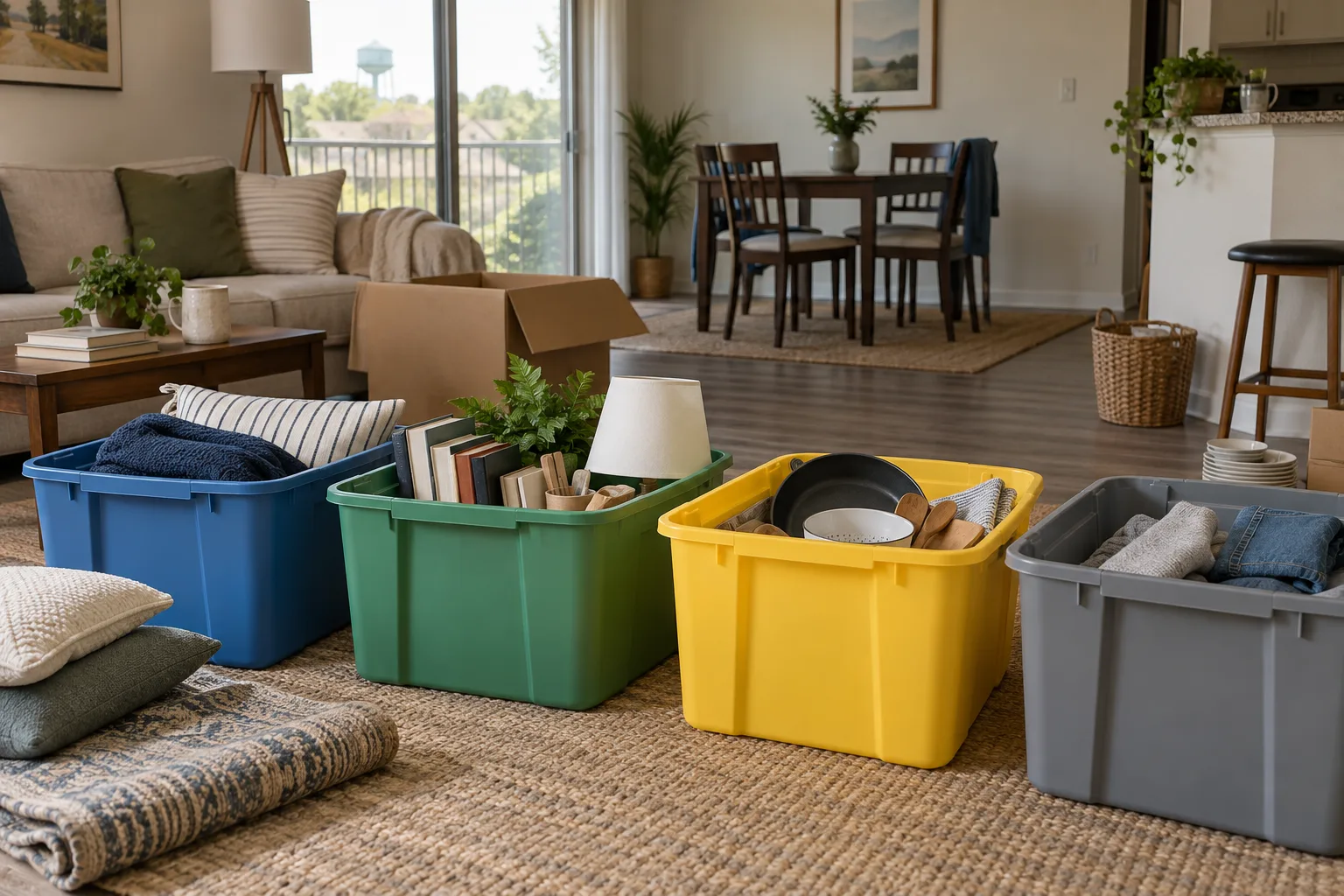
An apartment cleanout goes faster when every item has one of four destinations: keep, remove, donate or recycle, and special handling. Do not start by making a single large pile. A mixed pile hides keys, documents, medication and electronics inside material that looks ready to haul.
Make the first pass without lifting furniture
Walk the unit with a marker, tape and four clearly different labels. Mark the destination, not the room. A blue “keep” label on a lamp is more useful than a note that says “bedroom.” Photograph each room after the first pass. The photos give the removal team a view of volume and access, and they give you a record of what was present before work began.
First-pass checklist
- Collect keys, wallets, IDs, checks, lease papers and personal records.
- Remove medication, food and anything needed during the move.
- Choose one keep-zone that the crew will not enter.
- Mark furniture and boxes that stay.
- Put chemicals, paint, fuels, batteries and unknown liquids in a separate review zone.
- Photograph wide views, then photograph any unusually heavy or restricted item.
Use a room-by-room check after the destinations are clear
| Area | Check before removal | Details to tell the crew |
|---|---|---|
| Living room | Look inside drawers, media cabinets and sofa-bed compartments. | Sofa dimensions, recliners, glass, wall-mounted items and tight turns. |
| Bedrooms | Empty nightstands, under-bed storage and closets. Remove linens you want to keep. | Mattress sizes, bed-frame type and signs of pests or moisture. |
| Kitchen | Remove food, liquids and personal appliances. Check cabinets above the refrigerator. | Appliance type, whether it is disconnected and any narrow doorway. |
| Bathroom | Separate medication, sharps, cleaners and aerosols. | Any chemical or medical item; these should not be hidden in trash bags. |
| Balcony or storage | Check bins for keepsakes and documents. Keep propane and fuel separate. | Outdoor furniture, grills, cylinders, heavy planters and gate access. |
Separate items that should not enter an ordinary load
The Texas Commission on Environmental Quality lists corrosive cleaners, fluorescent bulbs, fuels, mercury, some paints, pesticides, pool chemicals and wood stains among common household hazardous waste. TCEQ advises keeping chemicals in their original labeled containers, upright and secured, and says never to mix products. Use the state’s program-contact list to find a current collection option for Brazoria County rather than placing unknown chemicals in the cleanout pile.
Electronics also deserve their own zone. Texas programs require computer and television manufacturers to provide recycling opportunities for covered equipment. Keep televisions, monitors, computers and loose batteries visible so the removal team can discuss the route for each item.
Prepare the handoff before the appointment
Send the apartment address, floor number, item list, photos, gate instructions, elevator rules, parking limits and deadline. If management requires a loading reservation, make it before the service window. Keep the removal path open, but do not stage furniture in a shared hallway without building approval.
Do one final walk with the person authorized to approve removal. Open each closet, cabinet and storage nook. Point out the keep-zone and confirm the marked items. That last five-minute check prevents the most expensive cleanout mistake: losing something that was never meant to leave.
Need help comparing the item list with the apartment access? Call or text (832) 856-9586 or review how the cleanout process works.
Sources checked September 21, 2026: TCEQ Household Hazardous Waste: A Guide for Texans, TCEQ local HHW program contacts, and TCEQ electronics recycling guidance. Texas guidance applies statewide; local program acceptance and event schedules vary.